

Nigeria’s democracy cannot now be described as “nascent.” But it was, when Salisu Buhari emerged as Speaker of the House of Representatives at the dawn of democracy in 1999. Just as he was about settling down to legislative business, a report by TheNews Magazine on its February 16, 1999 edition, indicated that Mr Buhari had falsified his age and forged the certificates he presented to the relevant authorities while aspiring to become a lawmaker.
First, the report confirmed that the young Speaker was born in 1970, contrary to his claims that he was born in 1963.
Second, the report found out that Bihari never attended the University of Toronto, let alone graduating from it. The significance of the age falsification was that he needed to beat the limit placed by Section 65(1) of the Constitution of Nigeria which disqualified anyone below the age of 30 from running for election to the House.
Buhari had also claimed that he did his National Youth Service at Standard Construction in Kano. This was also found to be intrue. No record was found that he actually did.
After initial denials and threats of legal action against the publishers of The News magazine, Buhari capitulated, admitted that he actually forged his certificates.
He was remorseful, and tendered apologies to Nigerians for his wrongdoing. He was forced to resign as Speaker and was later prosecuted and convicted of certificate forgery. He was then sentenced to two years in prison with an option of a fine. He paid the fine and was later pardoned by President Olusegun Obasanjo.
Since the “Buharigate”, Nigerians have been treated to a replete of cases of certificate forgeries and age falsification, some of them terminating at just the stages of allegations, others have been challenged in the courts, particularly during elections and post election litigations.
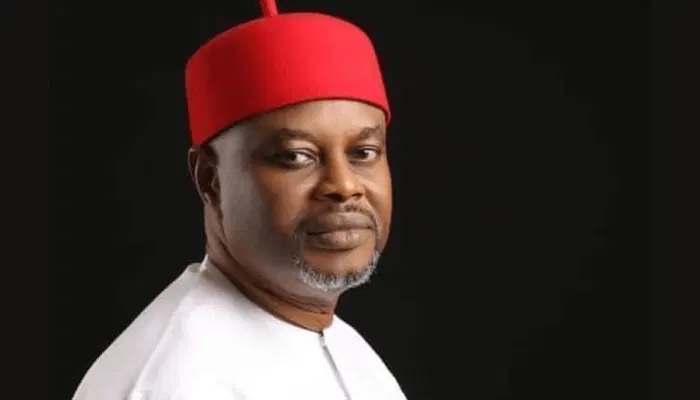
The recent expose by Premium Times has seen the former Minister for Science, and Technology, Geoffrey Uche Nnaji, battling for survival. That he lied about his qualifications and schools attended is now facts before the court of public opinion. He has already lost his job as a minister. Expectedly, his political survival will depend on whether the authorities will be willing to press charges of forgery against him.
The fall of Nnaji has again highlighted the efforts of the media towards creating a better society for all. Although political powers have tried to undermine this role, the resilience of the Nigerian media, particularly the likes of Premium Times, is here manifested in the face hostile conditions. These efforts by journalists should be commended and encouraged by ensuring that those who are exposed for wrongdoing are not allowed to get away unpunished.
In his case, Nnaji has refused to admit he forged his certificates despite the evidences against him. He has resorted to blaming his political enemies for trying to pull him down and tarnish his “good” image. We would recall that Salisu Buhari also travelled that road before he retraced his steps.
We do not know how long it will take Nnaji to tread the honorable path of contrition and repentance. But whether he does that or not, this is an opportunity for the Tinubu-led government to extricate itself from the odium created by multiple allegations of forgeries against it.
The Buhari example should be followed. Nnaji should be further investigated and prosecuted for forgery. His resignation is not enough. If he truly has forged documents detailing his qualifications, he should now be made to face the law.
Forgery carries penalties such as a three-year imprisonment under the Criminal Code and up to 14 years under the Penal Code for offenses like document falsification.
Yet this is endemic at all levels of the Nigerian civil life. The level of forgeries and age falsification in the Nigerian civil service is so widespread that some have thought it is a normal thing to do when trying to get employment or seeking to prolong your stay in the service. Sadly, many are not even aware that there is a law prohibiting it. Of serious concern is the fact that there is zero deterrence when those accused of forgeries walk free and are the same people in high places of leadership.
There are muffled tales indicating that some members of the present administration are as guilty as Nnaji. Whether this purgation will continue will be a function of the willingness of more whistle blowers to help serious investigators get the facts out to Nigerians.
Therefore to allow highly placed political office holders accused of forgery to slip through the gaps created by corruption after so brazenly compromising the system, is a discredit to any serious nation thinking of making progress in its fight against corruption.
In the coming days, Nigerians will expect the Federal Government and its security agencies to begin an inquest into the Nnaji certificate forgery, even if it is salutary to showing respect to the sensitivities of the people.
The Tinubu government cannot protect Nnaji without getting smeared or scathed by the scandal. The best approach is to let him bear his own cross in the face of the law. Those who have climbed to power through fraud will certainly have their day of reckoning. “Everyday for the thief…”