

During the week, the Nigerian House of Representatives’ Committee on the Review of the 1999 Constitution announced that it had received 31 requests for the creation of states. If my memory still stands strongly by me, this will be the sixth rehash of the process by National Assembly since 1999.
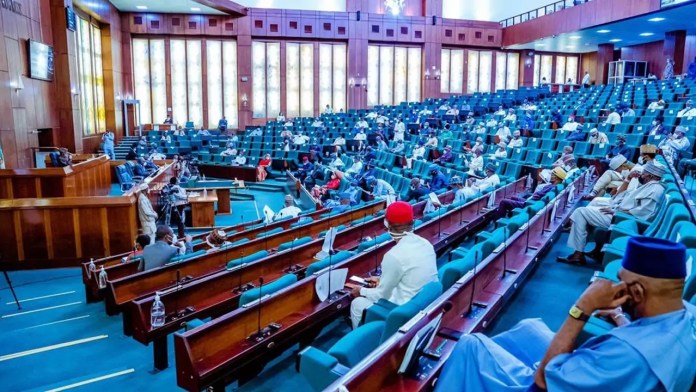
The efforts by the National Assembly to create more states out of the existing 36 states of the federation of Nigeria since the advent of democracy in 1999 is well documented. The Constitution of the Federal Republic of Nigeria 1999(as amended) has clearly stipulated the procedure for amending the constitution. Since then there has been a rush to test the expansive powers of the legislature using the task of creating more states.
It is commendable that the National Assembly has done well in the amendment of some crucial sections of the constitution in a bid to smoothen the process of governance and correct hitherto confusing and contradictory provisions. For example, far reaching amendments of the Constitution had helped in improving the electoral process and empowering the Independent National Electoral Commission to be able to conduct more credible and acceptable elections.
However, state creation remains far fetched. This is not because the National Assembly lacked the powers to run the process that could result in the creation of states. It is because the power to create states in a Democratic setting does not reside chiefly on the Federal legislature. As it is with democracy, the power lies with the people. Constitutionally, only the power of the collective will of the people can bring about the creation of states, (nay the amendment of any other section of the constitution). If the people affected and those to be benefitted reach a consensus, the process at the National Assembly would simply be a fait accompli.
I strongly hold that the initiative of state creation must begin with the states and at the states. This is because the process is quite clumsy and strait.
The procedure is enshrined in Section 8 of the constitution. To clear any doubts I will reproduce subsection 1(a-d) here:
1) An Act of the National Assembly for the purpose of creating a new State shall only be passed if-
(a) a request, supported by at least two-thirds majority of members (representing the area demanding the creation of the new State) in each of the following, namely
(i) the Senate and the House of Representatives,
(ii) the House of Assembly in respect of the area, and
(iii) the local government councils in respect of the area, is received by the National Assembly;
(b) a proposal for the creation of the State is thereafter approved in a referendum by at least two-thirds majority of the people of the area where the demand for creation of the State originated;
(c) the result of the referendum is then approved by a simple majority of all the States of the Federation supported by a simple majority of members of the Houses of Assembly; and
(d) the proposal is approved by a resolution passed by two-thirds majority of members of each House of the National Assembly.
Historically, state creation in Nigeria began in 1967 when the regional system(three regions of Western, Northern and Eastern) was replaced by states under the first military government post independence. A new region was created in 1963 named Midwestern Region. It is pleasing to note that this process was accomplished democratically. The people of the Benin and Delta provinces voted in a referendum to separate and form their own region. It was a remarkable feat as it was the only region in Nigeria created based on a popular vote by the people through a plebiscite.
When the military regime abolished the regional system in 1967, it went ahead to create 12 states. It proceeded thereafter to create additional seven states to bring the total to 19 in 1976. This exercise birthed the FCT.
The Ibrahim Babangida administration resumed the creation of states in 1987, when he created two states of Akwa Ibom and Katsina, bringing the number to 21 states. He also raised the number of states to 30 in 1991 shortly before his inglorious exit.
Sani Abacha, IBB’s successor, in a novel approach, created additional six states in October 1996. This time, the military government relied on the recommendations of the National Constitutional Conference, wearing a semblance of a democratic process.
It is common knowledge that Abacha’s sudden demise ushered in a transition which midwifed a Democratic process where it was no longer possible to unilaterally create states or amend any portion of the laws of the land.
It is noteworthy that several military governments created states by dividing existing states, merging, or restructuring them with the intent to solve ethnic, cultural and administrative imbalances.
It will be in place to say that the above imbalances still exist across the country and creating new states is expedient so the people at the receiving end can breath.
But the current National Assembly cannot create states given the profound political demarcation and mutual suspicion observable across the length and breath of the nation.
It appears to me that the crafters of the 1999 Constitution has the intention to forever forbid the creation of states, having in mind the prevalent socio-political antagonisms among the groupings that make up the Nigerian entity. The question is, why did they not recommend a simple referendum as used in the creation of the defunct Mid-Western Region in 1963?. Why did the constitution not stop at Section 8(1b), where approvals from the National Assembly members would be required after the referendum from the regions requesting for the state? Adding section 8(1c), the drafters of the constitution made it harder if not impossible to achieve the task of creating any state in this country.
The economic imbalance in the relationship between states and the Federal Government has also made it almost impossible for states to be created in the present situation. For states to be perpetually dependent on the central government for survival is a major impediment to having a new state. This is even worse, when it has been researched that only few states are economically viable.
Just as it is economically unwise to have more children, knowing that you will have more mouths to feed when the resources are unavailable, so also is it implausible to get other states to vote for the creation of new states when they know that it would imply a dwarfing of their monthly federal allocations.
Analysts have observed that each time new states are created, new majorities emerge, and new minorities also emerge, and so the clamor for most states continues. This notwithstanding, is tasking our ability to manage our growing population as well as the complex diversity.
Therefore, if states must be created, the process itself must be simplified through the amendment of section 8(1) of the Constitution.
Secondly, the economic restructuring of the country where states have the power to control and develop resources reposed in them must be considered to help states to look inwards in terms of self sustenance. If this becomes a reality, there will be no rivalry, and existing states may not be unwilling to cast their votes for a new state knowing that they have nothing to loose at the end of the process.
In the meantime, groups agitating for states can continue to present their cases before the relevant authorities, namely the National Assembly. It will at least show where their interest lies. But it might be easier for the carmel to go through the needle’s eye, than for a new state to be created in the current dispensation. I need someone to prove me wrong, at least with the creation of one state at the end of the current exercise.
Send your reactions to editor@newsbureau247.com or Whatsapp: 08146636712