
By Wale Obanigba, Esq.
The Ondo State Government’s reaction to the recent StatiSense report, as published by The Guardian, is understandable. No administration welcomes an unfavourable assessment of its performance. However, effective governance is strengthened not by dismissing criticism, but by engaging it with facts, openness and a willingness to improve.
Describing the StatiSense report as a “misrepresentation of facts” overlooks a more fundamental issue. The report did not introduce an entirely new narrative about Ondo State. Rather, it reinforced concerns that had already been highlighted by the 2025 Presidential State Performance Index (pSPI) published by Phillips Consulting.
That is the real issue.
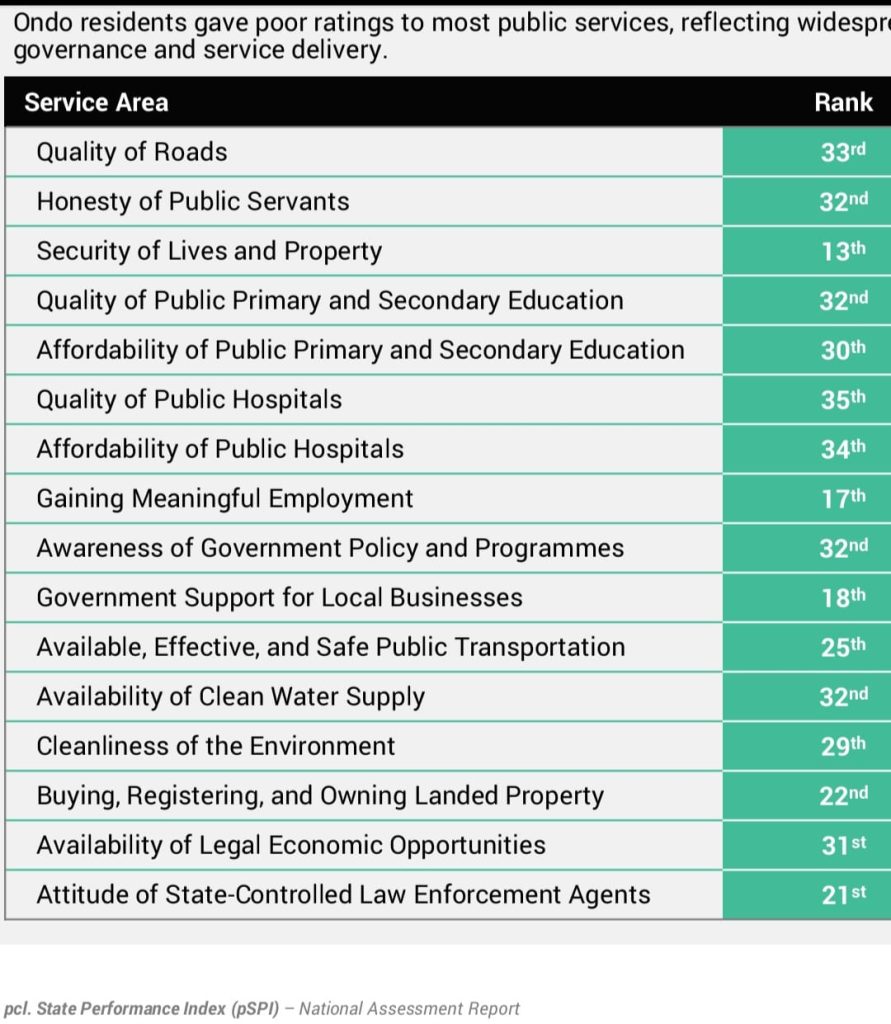
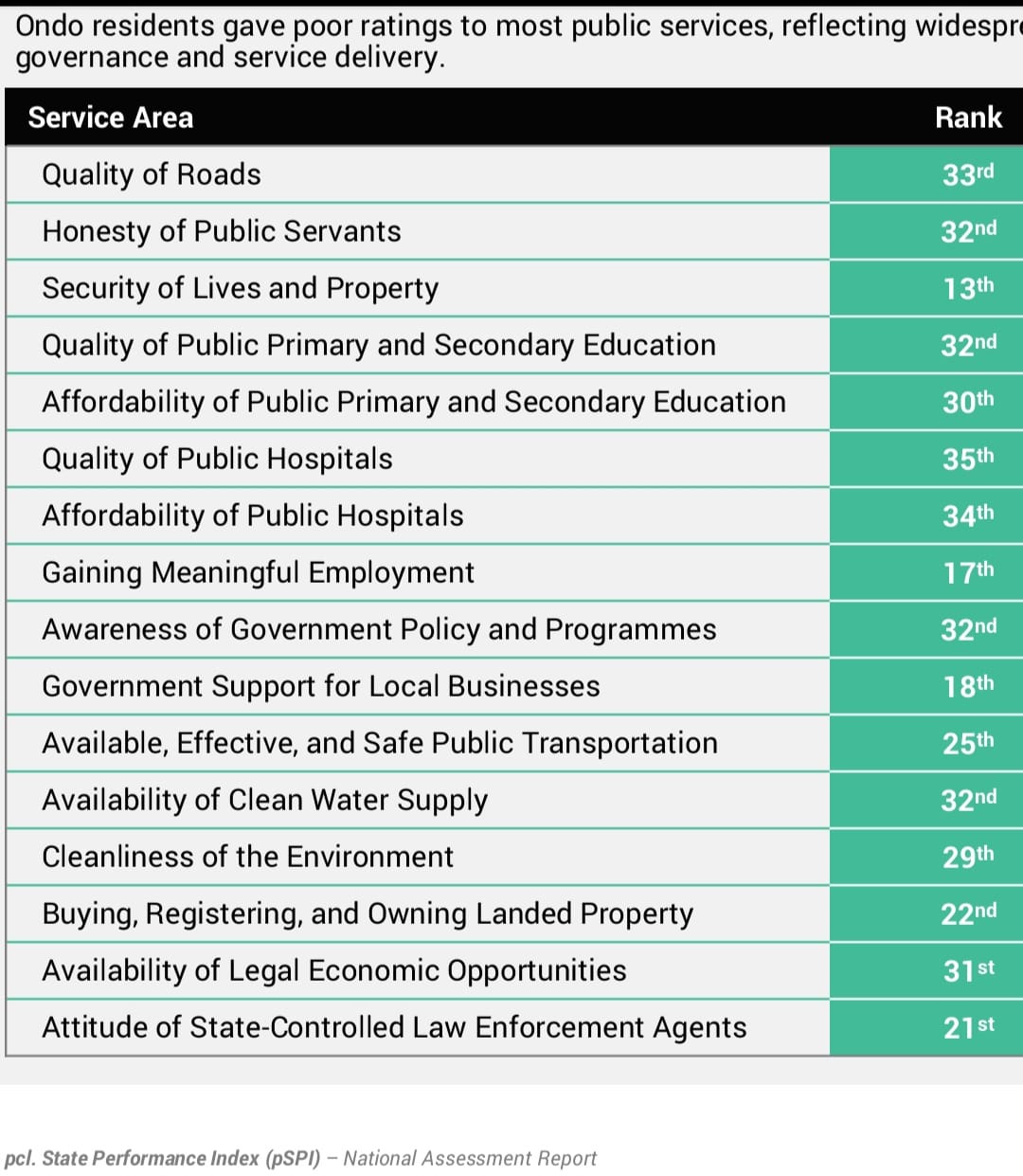
Although the two reports adopted different methodologies, they arrived at broadly similar conclusions on several key governance indicators. The pSPI assessed state performance using a combination of objective data and perception-based indicators across multiple sectors. StatiSense, on the other hand, focused primarily on citizens’ perception of governance and the quality of public service delivery. They viewed governance through different lenses, yet both pointed to similar underlying concerns.
When two independent organisations, working separately and applying different analytical frameworks, identify comparable weaknesses, their findings deserve careful consideration rather than outright dismissal.
The government’s response highlighted numerous projects, policy initiatives, recruitment exercises and investments in health, education, agriculture, infrastructure and security. These are legitimate efforts and should be acknowledged. Every responsible government has an obligation to invest in public services and critical infrastructure.
However, governance is appraised by outcomes, not by activities.
Recruiting teachers is important, but the real question is whether learning outcomes have improved. Equipping hospitals is commendable, but citizens are more concerned with whether quality healthcare has become more accessible, equitable and affordable. Constructing roads is necessary, but the true assessment is whether they have improved mobility, stimulated commerce and enhanced economic productivity. Likewise, investment announcements and memoranda of understanding become meaningful only when they translate into functioning industries, sustainable jobs and increased prosperity.
This distinction between inputs and outcomes is precisely what independent governance assessments seek to measure.
The administration also cited Ondo State’s reduction in domestic debt as evidence of prudent fiscal management. Fiscal discipline is undoubtedly commendable. Nevertheless, debt reduction alone cannot serve as a comprehensive measure of governance performance. Citizens judge government by the quality of services they receive, the opportunities available to them and the extent to which public policies improve their daily lives.
Independent assessments are not designed to diminish government efforts. Their value lies in providing an objective benchmark against which governments can evaluate their performance, identify gaps and refine policies. Even where there are legitimate disagreements over methodology, dismissing the findings without engaging their substance does little to inspire public confidence.
No report is infallible, and no methodology is beyond scrutiny. Yet when separate institutions, working independently and employing different assessment models, arrive at broadly similar conclusions, prudence demands introspection rather than defensiveness.
The convergence between the pSPI and StatiSense reports should therefore be seen as an opportunity, not an affront. Governments committed to continuous improvement do not fear independent assessments; they learn from them. Rather than discrediting reports that raise uncomfortable questions, the Ondo State Government should objectively interrogate the findings, address identified gaps and recalibrate its policies where necessary.
The most convincing response to any critical assessment is not an elaborate rebuttal, but measurable improvements in governance that independent institutions can validate and, more importantly, that the people of Ondo State can genuinely experience in their daily lives.
Wale Obanigba writes from Akure, the capital of Ondo State.