
Precious Josiah.
House of Representatives’ Speaker, Tajudeen Abbas has said that the house will prioritize the reforming of the electoral laws ahead of the 2027 general elections.
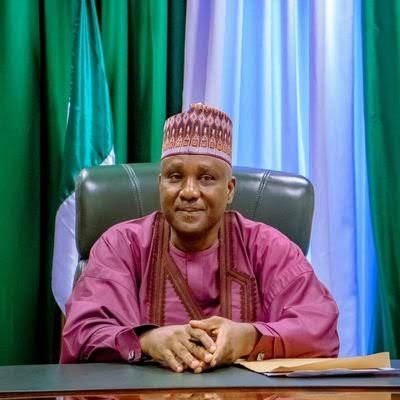
He said the house will also focus on security reforms, saying that the debate on multi-level policing must move from theory to decisive legislative action.
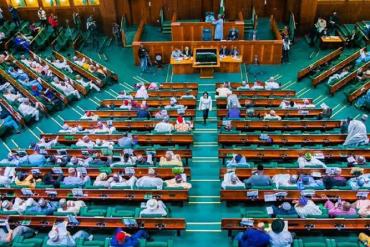
Tajudeen made these known in his address to Representatives as they resumed from recess on Tuesday.
”Creating state police through a constitutional amendment remains an option. At the same time, we must strengthen community policing by revising the Police Act, 2020,” he said.
He said finalising electoral reforms well ahead of the 2027 general elections, will engage the attention of the house.
”The Electoral Act Amendment Bill seeks not only to strengthen measures against violence, improve access for persons with disabilities, and establish clearer timelines for resolving disputes, but also to reduce the ambiguities that trailed the last elections,” the Speaker noted.
”Our goal is to make elections less contentious and litigious, lower their cost through single-day voting, and make the process of party primaries more democratic and inclusive.
”Related constitutional changes include provisions for an Electoral Offences Commission. Our goal is to produce a new Electoral Act that stands the test of time.”
According to the Speaker, the house passed a total of 237 bills between 2023 and 2025 out of a total of 2,263 bills considered during the period.
He also said that of the number, 50 received Presidential assent.
He said the bills addressed key issues such as power reform, student loans, cybersecurity, tax policy, and regional development.
”Our midterm review confirms that the 10th House of Representatives has been the most productive since 1999, both in terms of legislative outputs and outcomes,” he said.
”Despite political and economic challenges, we have strengthened internal capacity, updated our rules, and expanded citizen participation.
”We have deepened public engagement through the House Open Week, town halls, media briefings, and the use of digital and new media tools.”
He said while the House was on recess, headline inflation decreased for a fifth consecutive month to 20.12 per cent, while food inflation also eased.
He noted that diplomatic measures restored United Arab Emirates (UAE) visa services and Emirates flights, reopening avenues for trade and travel.
He also said the security agencies disrupted insurgent networks and rescued abducted citizens.
”While progress has been made, Nigerians still experience high living costs, underemployment, and insecurity in some areas,” he observed.
”These challenges present opportunities for us to implement targeted legislative actions and foster ongoing engagement to create a brighter future for all.”
According to the Speaker, President Bola Tinubu has put in place reforms to stabilize the economy, security and also attract investment to the nation.
“We resume today at a pivotal midpoint in the life of the 10th Assembly. The responsibilities before us are substantial, and the progress we have made so far is meaningful but incomplete,” he said.
”The Nigerian people look to us for more; they expect deliberate action that improves their daily lives.
”The Renewed Hope government of President Bola Ahmed Tinubu has pursued reforms to stabilise the economy, enhance security, and attract investment.
”These efforts require a legislature that provides rigorous oversight, crafts sound laws, and engages constructively with all arms of government.”
The Speaker noted that House’s oversight efforts had become increasingly rigorous, leading to ongoing investigations and financial recoveries.
He also noted the House’s “constructive collaboration with the Executive,” saying it had facilitated timely budgets, aligned reforms, and effective policy outcomes.
”This partnership has allowed us to maintain the legislature’s independence while demonstrating that shared goals can yield greater results than conflict,” he said.
He also said the Reserved Seats Bill for women would be another priory for lawmakers.
”Currently, women hold fewer than 5% of seats in the National Assembly, placing Nigeria among the countries with the lowest female parliamentary representation worldwide,” he said.
”The bill proposes creating additional seats, without reallocating existing ones. These seats will be contested exclusively by women.
”They are entirely new and will not affect the current 109 seats in the Senate or the 360 seats in the House. This arrangement preserves the mandate and aspirations of existing Members while expanding opportunities for women’s representation and helping Nigeria improve its poor global standing.
”I urge Members to support this historic step. We are all HeForShe in advancing gender inclusion, and how we vote on this bill will shape how history and our daughters remember us.”