NB247
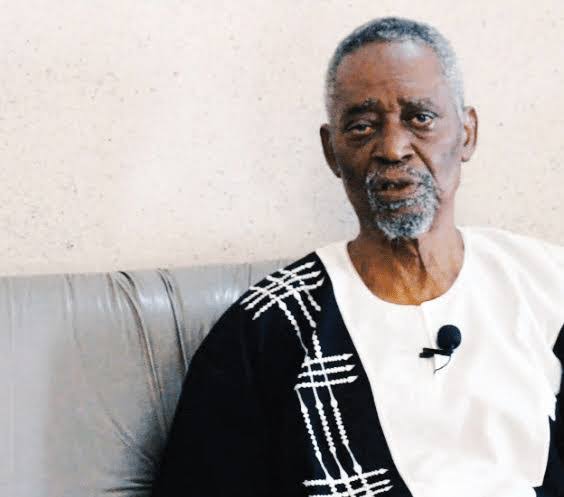
A leader of the Pan Socio-political group, Afenifere Basorun Seinde Arogbofa, has again stressed the need for true federalism and collective responsibility in the rebuilding of the nation.
He also called for sustained support for the current administration in addressing Nigeria’s long-standing challenges.
Arogbofa who spoke in the light of the 65th Independence Anniversary of Nigeria, underscored the urgent need for restructuring and establishing a proper federal system.
“We are not practising a true federal system in this country. We are not,” he lamented.
Arogbofa cited systemic challenges in governance, including the legislative, executive, and judicial arms of government.
“He (President Tinubu) has a lot of problems. The administration, the judiciary, the legislature. Sometimes they can create some problems. Like, for example, the police, the state police. What are we still waiting for?” he said.
“I have always made it clear that when we look at the developmental strides in this country, generally, we have been taking three steps backwards. I mean, two steps forward and three steps backward, which means we have always been having a deficit in nearly everything.”
He stated that these deficits are structural and cannot be corrected overnight.
However, he acknowledged that the current government, led by President Bola Ahmed Tinubu, had taken initiatives he considers bold.
“What the present government led by Senator Tinubu has been taking are some bold steps. He came in like a war general to fight, to get us back on track. He was bold, very bold. What others fear to do, he came up boldly, even the very first day,” Arogbofa said.
He identified economic recovery and insecurity as key national problems and commended the administration’s efforts in confronting them.
“These issues are being frontally tackled. We have to give him those credits. But from my own point of view, things have gone so bad in this country that only people who have courage can really come out the way he has done,” he said.
Arogbofa noted that national recovery requires a joint effort between government and citizens.
“Nigerians must realise that there’s a need for everybody to be on board… It’s not an easy situation,” he stressed.
He admitted there were lapses in the current administration’s approach, some of which, he said, the public also contributed to.
“Apart from a few lapses which can be corrected, some of them for which we are responsible, I mean, Nigeria is responsible,” he explained.
On insecurity, he noted the role of past administrations in allowing it to grow unchecked.
Said he: “In the time past, our governments were looking the other way, It is true that our borders are porous, and we want the government to do something.
“One is scared, for example, to hear what is happening in Kwara. It’s very frightening.
“If security is tackled better, there are drones to spot evil doers and the state police is introduced. And farmers are able to go back to their farms. And People are not just killed like chickens on the road in their villages, as is happening in Makurdi.”
On corruption, he said, “As far back as the Babangida government, this corruption has taken root and has been aggravating. Those at the top are more to blame.
“The average Nigerian is very respectful of the law… until a man in power, who told you not to do it, starts doing it. So when you do it, and he sees it, he will do it better than you.
“If you are offered bribes, and you don’t take them, you are already tackling the corruption of the mind. But there is also the level of corruption which is a result of the economic problem.
“It is no longer a secret that people have to bribe their way through in most of our offices now.”
On the question of national unity, he said Nigeria was more united in years past than now, recalling his personal experiences in the early 1960s.
“When I was in the university, 61–64, my roommate was an Igbo, We lived together in the same room for two academic years, no problem.”
He recalled a period when identity was less divisive, and interactions were defined by shared purpose, especially during his tenure in the national conference of school principals.
However, he noted that ethnic and regional divisions have grown over the years, including in public service.
“Unless you belong to a particular tribe, at the head of a corporation or something, others won’t have any chance.”
He linked these trends to the need for a true federal structure that gives all states more say in their development.
“Every tribe, there should be inclusivity in government. Every state should be given licence to develop what they have and a kind of tax into the federal government.”
He also discussed the initial amalgamation of Nigeria as a foundational issue that did not allow for the input of the people.
“Nigeria has just been brought together, northern and southern territories, without any formal meeting. People were not brought together to have an input.”
He believes the government is making efforts to correct these issues, though he admitted the process is difficult.
“Honestly, this government is trying to address whatever mistakes that have happened in the past. And it is not easy.”
He urged both citizens and government officials to exercise patience and acknowledge the varying degrees of suffering in the country.
“Suffering differs. The type of suffering those at the top are having will be very different from those at the lower level.”
He described Nigeria’s early leaders such as Tafawa Balewa, Obafemi Awolowo, and Sardauna as examples of integrity in public service.
“These were people who were above, far above board. So, they tried, they tried.”
Despite public disillusionment, Arogbofa maintained that progress is possible.
“A lot of people outside there believe nothing can be done because of what they are seeing. The present government is doing a lot.”
He concluded by encouraging transparency in evaluating government efforts and emphasised the importance of collective will.
“Where the government is doing well, let’s say it. Where the government needs to do better, let’s say it. Where they’re not doing very well, let’s say it.”